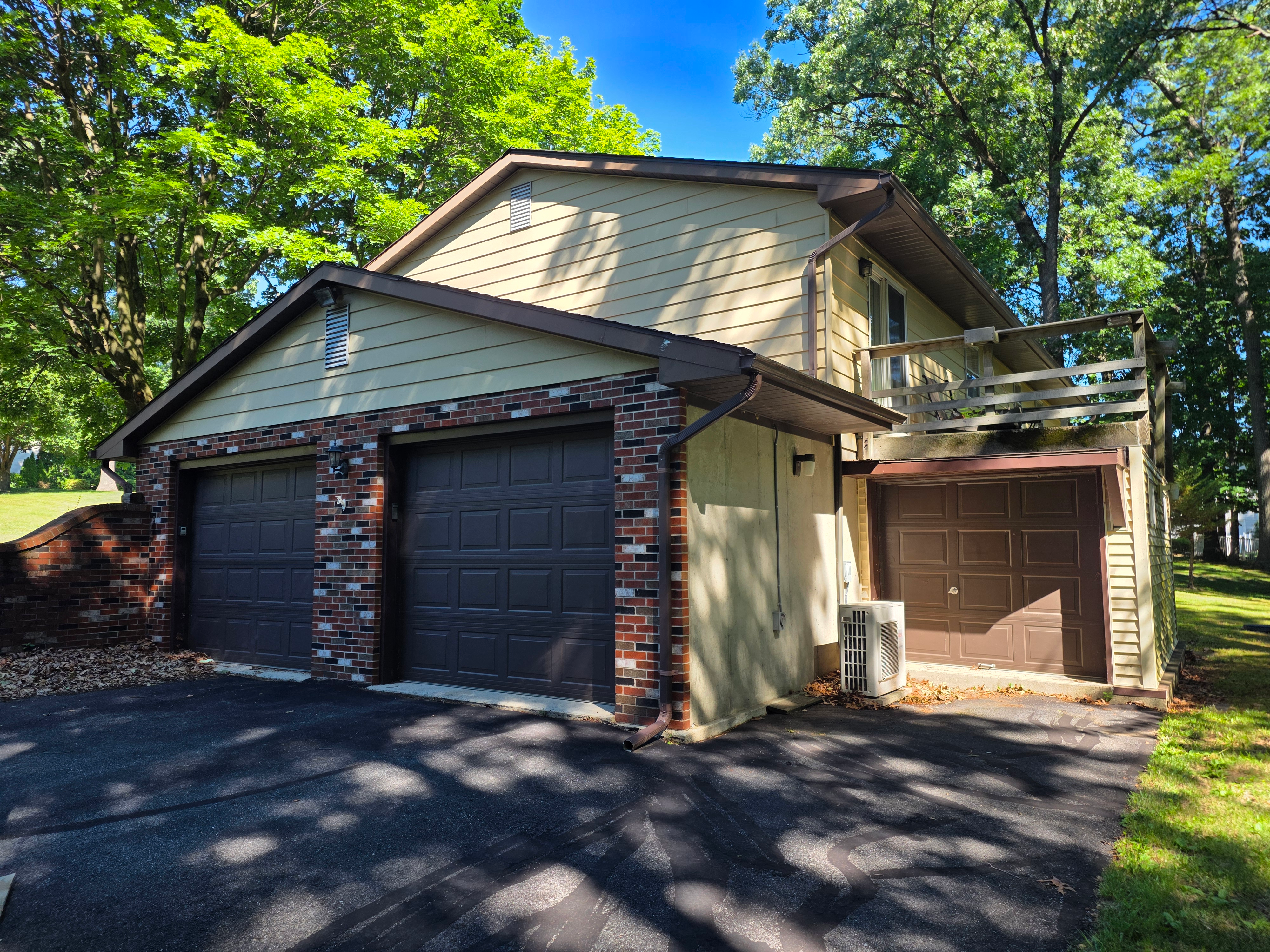
Bi-level homes — also called split-level homes — are one of the most common residential architectural styles in the Lehigh Valley. They offer a distinctive layout that separates living spaces across two levels, typically with a short flight of stairs between the main floor and the lower level. If you're shopping for a home in Northampton, Lehigh, or Carbon County, here's what to understand about bi-level architecture.
What Defines a Bi-Level Home?
A bi-level home has two main living levels, typically split by a half-flight of stairs from the front entry. When you walk through the front door, you usually arrive at a landing: one set of stairs goes up to the main living level (kitchen, living room, bedrooms, bathrooms), and another set goes down to the lower level (family room, additional storage, garage access, or finished recreation space).
This layout is distinct from a traditional ranch (single-level) or a full two-story home. The split design creates a natural separation between living areas that many families find practical.
The Advantages of Bi-Level Living
- Separate living zones: The upper level typically houses the kitchen, dining area, living room, and bedrooms, while the lower level provides a family room, recreation space, or home office. This separation is ideal for families with children or anyone who works from home.
- More square footage than a ranch: By utilizing two levels, bi-level homes often pack more usable space into a smaller footprint, leaving more yard area on the lot.
- Flexibility: The lower level can serve many purposes — a family room, home gym, workshop, guest suite, or in-law area. Many bi-level homes have direct access to the garage from the lower level, adding convenience.
- Value: Bi-level homes are generally more affordable per square foot than comparable two-story or colonial-style homes in the same area, making them a strong option for first-time buyers and investors.
What to Look for When Buying
Like any home style, bi-levels have features to evaluate carefully:
- Lower-level ceiling height: Some older bi-levels have lower ceilings on the ground floor. Check whether the lower level feels comfortable or could be renovated to add headroom.
- Natural light: The lower level may have smaller windows. Walk through during daylight to assess how much natural light the space receives.
- Systems and updates: Check the age of the HVAC, water heater, roof, and windows. Bi-level homes from the 1970s–1990s may benefit from energy-efficiency upgrades like mini-split systems.
- Garage configuration: Many bi-levels feature attached garages with entry at the lower level. Verify the garage size, door count, and any additional storage areas.
Bi-Level Homes in the Lehigh Valley
The Lehigh Valley has a large inventory of bi-level homes, particularly in suburban developments built from the 1970s through the 1990s. Communities like Lehigh Township, Whitehall, South Whitehall, and Bethlehem Township all have significant numbers of bi-level properties.
Properties like 528 Rosewood Dr in Oakdale Manor exemplify the strengths of the bi-level layout: a main level with oversized bedrooms, living room, dining room, and eat-in kitchen, plus a lower-level family room with direct access to the garage and additional flex space. With a wooded lot, a deck, and a 2.5-car garage with three doors, it's a practical and well-configured example of the style.